


What you learn:
- Which health data you should record for every horse
- How to never miss a due vaccination, deworming or farrier appointment
- Why a central health record saves time with vets, owners and buyers
The problem: health data in too many places
In many stables health information is spread over equine passports, notebooks, messages and the memory of individual people. As long as there are only a few horses, this may work. With more horses, more owners and changing staff, it quickly becomes unclear when a horse was last vaccinated, dewormed or shod.
What belongs in a health record
A complete health record for each horse should contain:
- Vaccinations with date and vaccine
- Deworming and, if used, faecal egg count results
- Farrier visits and shoeing details
- Vet treatments, medication and notes
- Dental checks, physiotherapy and other treatments
- Documents such as x-rays or vet reports
The intervals for vaccinations and deworming depend on the horse, the region and current recommendations. Agree on them with your vet and note the next due date right after each entry.
Plan the next appointment immediately
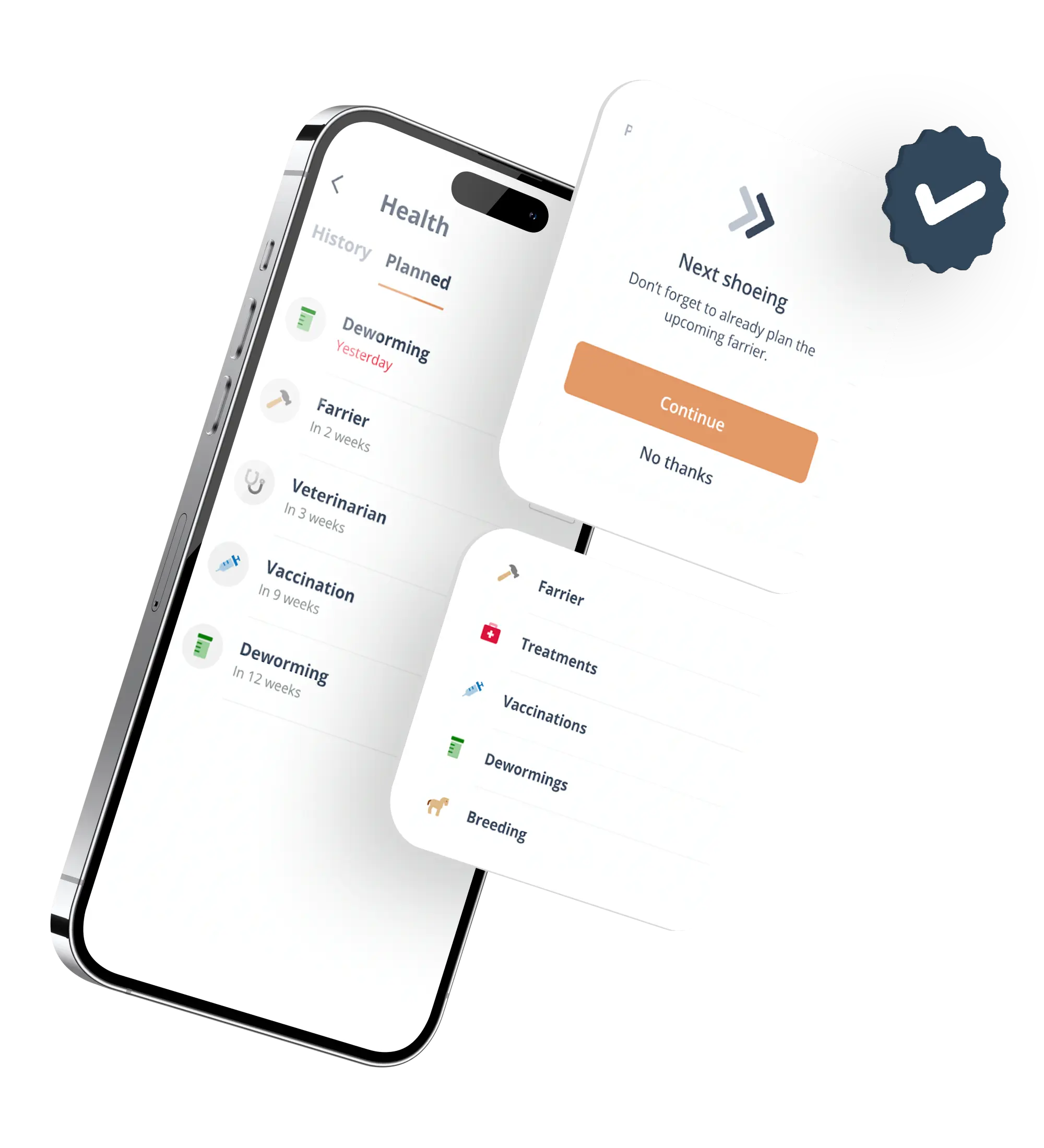
The most reliable habit is simple: whenever you record a treatment, schedule the next one straight away. This turns your health record into a to-do list for the future, so nothing is forgotten.
Keep the overview across all horses
Looking at one horse at a time is not enough in a larger stable. You also need a view of everything that is due this week across all horses. This makes it easy to plan farrier days or vet visits for several horses at once.
Share the right information with the right people
Owners, riders, vets and buyers all need different parts of the health data. Being able to share selected information quickly builds trust – for example before a sale or a pre-purchase exam.
How Hippovibe helps
Hippovibe gives every horse a digital health record with treatments, vaccinations, shoeing and deworming. After each entry you can schedule the next appointment, and you get reminded when something is due. With individual access rights you decide who can see health data. In a livery yard this keeps every boarder's horse covered; in a show stable the records travel with you to every show. You can test Hippovibe for free for 14 days.


